
Business
Horizons Middle East & Africa 11/5/2026 (Video)
By Katherine Langford
Advertisement · Why this ad?
Marcus manages the day-to-day editorial workflow across all brands, coordinating coverage assignments and ensuring editorial standards are met. He previously served as city editor at the Pioneer Press and holds a degree in Political Science from Carleton College.
More from Marcus →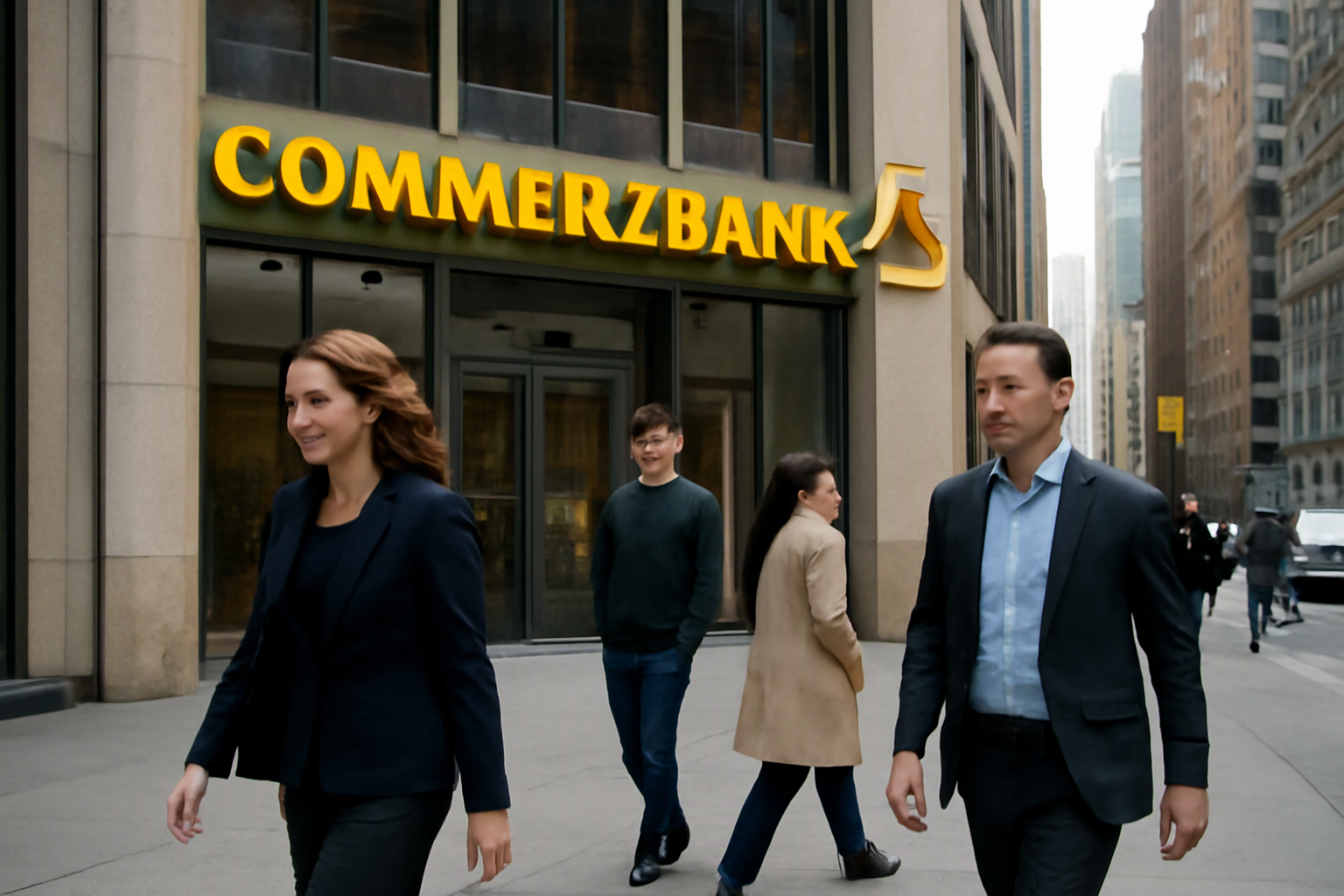
In a bustling Frankfurt office, the news reverberated through the financial district: Commerzbank AG, one of Germany's major banks, announced a staggering 45% increase in profit for the last quarter. This significant leap comes as the bank prepares for a pivotal transition, with UniCredit SpA poised to take control.
Commerzbank's latest earnings report stunned analysts and investors alike, showcasing a profit surge that surpassed expectations. The bank's profit climbed to €340 million ($375 million) in the third quarter, a notable increase from the previous year. This marks one of the final financial statements from Commerzbank as an independent entity, with the impending acquisition by UniCredit set to reshape the landscape of banking in Europe.
The profit jump is attributed to a combination of factors, including a robust performance in its corporate banking division and improved net interest margins. The bank's focus on streamlining operations and reducing costs has also played a crucial role in enhancing profitability. Commerzbank's CEO, Manfred Knof, expressed optimism about the results, stating that the bank is on a solid path ahead of the merger.
The acquisition by UniCredit, expected to be finalized in the coming months, will create one of the largest banking institutions in Europe. This move is part of UniCredit's strategy to strengthen its presence in Germany and enhance its competitive edge in the European market. The deal, valued at approximately €18 billion, is seen as a significant step towards consolidating the banking sector in Europe, which has faced numerous challenges in recent years.
As Commerzbank prepares for this transition, the financial community is closely watching how the merger will impact both banks' operations and customer services. Analysts predict that the combined entity will be better positioned to navigate the complexities of the current economic climate and compete more effectively against larger rivals.
Investors reacted positively to Commerzbank's earnings report, with shares rising sharply following the announcement. The market's confidence reflects a broader belief in the bank's potential under UniCredit's leadership. Notably, the stock price surged by nearly 10% in early trading, signaling strong investor sentiment.
Market analysts have pointed out that the successful earnings report may provide a solid foundation for UniCredit as it integrates Commerzbank into its operations. The positive financial results could lead to increased investor confidence in the merged entity, setting the stage for future growth and stability.
The implications of this merger extend beyond the financial sector; they will also resonate within the communities served by both banks. Commerzbank has a significant presence in Germany, with a focus on supporting local businesses and fostering economic growth. As the bank transitions to UniCredit, stakeholders are keenly interested in how community engagement initiatives will evolve.
Local businesses rely on the support of financial institutions like Commerzbank for loans and investment opportunities. The merger raises questions about the continuity of these services and the bank's commitment to its corporate social responsibility. Community leaders hope that UniCredit will maintain and even enhance its support for local economic development.
For many small businesses, Commerzbank has been more than just a lender; it has acted as a partner in growth. Local entrepreneurs, such as Anna Müller, who runs a small café in Frankfurt, expressed concerns about the merger. "Commerzbank has supported my business with favorable loan terms and advice on managing finances. I hope UniCredit will continue this support and not just focus on larger clients," she said. These sentiments echo across various sectors of the community, highlighting the importance of local banking relationships.
Moreover, the merger raises concerns about potential changes in employment practices. Commerzbank has historically prioritized local hiring and community involvement, fostering a sense of trust and loyalty among customers. Local leaders, like Frankfurt Chamber of Commerce President Klaus Schmidt, emphasized the need for UniCredit to honor these commitments. "The local economy thrives on strong relationships between banks and businesses. We urge UniCredit to recognize the value of maintaining these ties during the transition," he stated.
As Commerzbank gears up for its transition into UniCredit, several key priorities will shape its future. First and foremost, the bank must ensure a smooth integration process, which includes aligning operational practices and corporate cultures. This will be critical to retaining customer trust and loyalty during the transition.
Additionally, Commerzbank will need to focus on maintaining its competitive edge in the market. The financial landscape is evolving rapidly, with increasing competition from fintech companies and digital banking solutions. To thrive, the bank must innovate and adapt to changing consumer preferences while leveraging the strengths of its new parent company.
Looking ahead, both banks are expected to announce further strategic initiatives aimed at enhancing their market position. This may include expanding their product offerings, investing in technology, and exploring new markets. The future holds promise for the merged entity, and stakeholders will be watching closely as developments unfold.
The merger between Commerzbank and UniCredit is not just a corporate event; it has broader implications for the European banking landscape and the economy at large. As banks consolidate, there is a potential for increased efficiency and stability, but also concerns about reduced competition. Economists warn that fewer large banks could lead to higher fees and less favorable lending terms for consumers and small businesses.
Furthermore, the merger comes at a time when the European economy is still grappling with the aftermath of the COVID-19 pandemic. Local economies, particularly in Germany, are looking for robust financial institutions that can provide the support needed for recovery. The success of the Commerzbank-UniCredit merger could serve as a bellwether for other banks considering similar consolidations in the future.
As the integration progresses, the banks must also address potential job losses that might arise from overlapping functions. Employee unions have expressed concerns about job security, and both banks will need to engage in transparent communication to mitigate fears and ensure a smooth transition for their workforce. Union representative Michael Weber stated, "It is crucial that both banks work together with us to protect jobs and ensure that employees are not left in the lurch during this transition."
In conclusion, Commerzbank's impressive profit jump is a significant milestone as it prepares for a transformative merger with UniCredit. While challenges lie ahead, the potential for growth and innovation remains high as the two banks join forces to create a more formidable presence in the European banking landscape. The community, investors, and employees alike will be closely monitoring the developments in the coming months, as the future of banking in Germany and beyond hangs in the balance.
By Katherine Langford

By Marcus Chen

By Marcus Chen

By Katherine Langford